
Maybe there’s more to the story.

Judging others makes us blind, whereas love is illuminating.  By judging others we blind ourselves to our own evil and to the grace to which others are just as entitled as we are.” – Dietrich Bonhoeffer

Have you ever judged someone just by the way they look? Or how they worship? Or how they vote? Have you ever assumed motives behind what someone said and later found they meant it in an entirely different way? It’s so easy to label people or to misinterpret a comment, text, or post.

We too often assume we know more than we do about another person’s beliefs, motives, or actions. Maybe that’s why the Bible has many cautions about being quick to judge. Think of Hannah in 1 Samuel 1. She desperately wanted children, but she and her husband had been unable to conceive. She was despondent and out of options. So, she went to the tabernacle to talk to God. She wept and prayed quietly – her lips were moving, but no sound came out.

Eli, the priest, saw this and was immediately filled with disgust. He assumed she had been at the festival and was drunk – in this holy place. So he confronted her, and she responded, “No, my lord, I am a woman troubled in spirit. I have drunk neither wine nor strong drink, but I have been pouring out my soul before the Lord.” Eli quickly saw she was telling the truth and reversed his judgment, offering her a blessing instead of a rebuke.

Judging is so easy to do! Let’s be wary of it by committing to these attitudes instead:

  • Assume the best motives unless or until proven otherwise.
  • Don’t be too easily offended.
  • Sometimes just let it go.
  • Love and be loved.

Life will be better. God will be pleased.

“Do not judge by appearances, but judge with right judgment.”- John 7:24
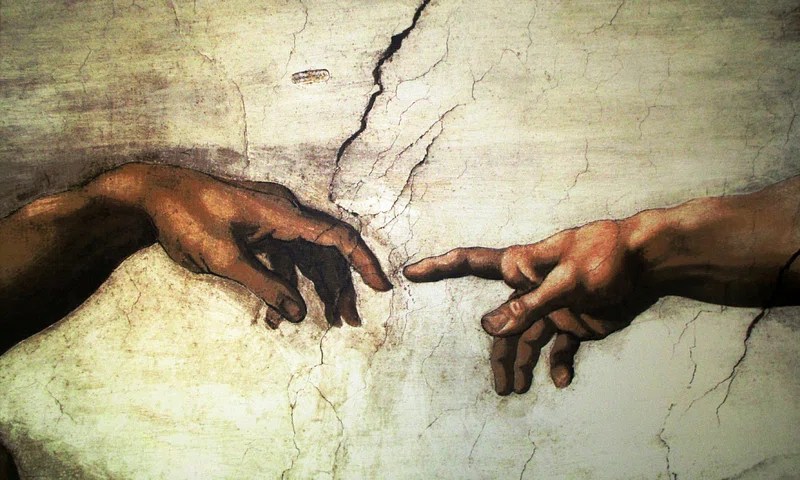
Learning to Learn

“I am still learning.” — Michelangelo (at age 87)

Someone once told me, “Some people live and learn. Others just live.” I’m hoping we all want to be the first kind!

So, what do we need to learn? Sometimes it’s professional, like a new skill we need to develop in order to do our jobs better. Sometimes it’s personal like how to adapt to health challenges, financial pressures, growing-up children, aging parents, or relationship struggles. And, always, it’s spiritual. Every challenge we face and every mistake we make has a spiritual component – something we can learn.

How can we learn at whatever stage of life we are in? The first recourse, for those who are Christians, is the Bible. We need to keep reading it, following its wisdom and its Author.

Next, we need good counselors or mentors. There are always those who have already traveled the road we are on and can offer sage advice from their own experience. And sometimes books can be those mentors to us if we find quality authors sharing their wisdom.

Finally, we just need to pay attention. Friends and family communicate in words, deeds, and sometimes just body language. Our own bodies tell us what they need. Watch, listen, learn. We can never stop learning. We need guidance in every step of this journey through life.

As we learn, we live better: Serving where we are placed. Taking care of our bodies. Loving those nearest to us. Getting to know those who are farther away. Mourning meaningfully. Enjoying celebrations. Sleeping well.

Let’s learn something every day of our lives!

Make me to know your ways, O Lord;
    teach me your paths.
Lead me in your truth and teach me,
    for you are the God of my salvation;
    for you I wait all the day long. –
Psalm 25:4-5

Things God Never Says #5

“All my knowledge of him depends on his sustained initiative in knowing me.” – J. I. Packer

We humans tend to think of God as human-like – just bigger, stronger, wiser, and holier. But that’s not good thinking. He is so, so different from us.

I hope this short series of “things God never says” helps us realize that God doesn’t say the things humans say or think the way humans think. Our Creator is different, and he’s outside of anything he’s created – including us.

So, when God, a being we cannot even imagine let alone understand, wants to communicate with us, is it any wonder we don’t always “get it”? Even when God took on a human body and came to earth to help us understand him and his plan for us, his disciples often misunderstood. They didn’t really grasp Jesus’s mission until after his resurrection.

God doesn’t give up. He continues to teach and reveal and guide. Jesus is the bridge between the knowable and unknowable God, the Holy Spirit enlightens us, and the Bible is God’s revelation of himself, and still he says, “. . . my thoughts are not your thoughts, neither are your ways my ways . . .” (Isaiah 55:8).

But, what he never says to us as we struggle to know him is, “Why can’t you understand?” He knows all our limitations and views us with compassionate patience.

Paul says it’s like we’re looking into a mirror now, seeing images and reflections, but someday we’ll see face-to-face. Then things will become clear. Until then, we’re grateful that God still communicates, and that he’s patient with our dusty efforts to understand.

“As a father shows compassion to his children,
    so the Lord shows compassion to those who fear him.
For he knows our frame;
    he remembers that we are dust.”
– Psalm 103:13-14

True or False?

“Truth is so obscure in these times, and falsehood so established, that, unless we love the truth, we cannot know it.” – Blaise Pascal

I read once that when law enforcement officers train business owners to recognize counterfeit bills, they don’t spend any time looking at the counterfeits. Instead, they study a real bill, implanting every detail in their brains. Why? Because if they know what the real thing looks like, feels like, and smells like, they won’t be fooled by something that’s close, but counterfeit.

It’s one thing to be deceived about the validity of paper money; it’s quite another to be misled about matters of eternal consequence. The place we go to for truth we can rely on is God’s Word. The Bible is God’s revelation of ultimate truths about our purpose in this world, his character and standards, how we should relate to other human beings, how and why we should take care of the earth, and life after death. It really matters that we get those things right!

There are many theories out there about these issues, but there’s only one source of truth by which we measure everything else we hear, see, or read. If the message syncs with what God says, it’s truth. If it varies, even a little bit, it’s false. It’s of ultimate importance to know the difference.

The only way not to be misled, is for us to immerse ourselves, first of all, in reading and studying God’s Word. Then we can supplement that by listening to trusted biblical teachers and reading reliable Christian authors. When we have the truth firmly implanted in our minds and hearts, it will be easy to see and discard the counterfeits.

“Guide me in your truth and teach me, for you are God my Savior, and my hope is in you all day long.” – Psalm 25:5

Doing, being, becoming

“To fail to see the value of simply being with God and ‘doing nothing’ is to miss the heart of Christianity.” – Peter Scazzero

Have you set goals for 2024? Many of us have. We want to set our sights on what we can accomplish before another new year dawns. Many of the self-help books tell us to set goals that will challenge us – “dream big”, they say.  I think it’s good to keep reaching, to want to achieve, but most of us will get to the end of this year with some goals that are unfinished, unreached. What do we do with that?

Maybe we need a little balance: Striving and achieving, yes. But, maybe more importantly, being and becoming.

Here’s why: Some year, we’ll set our goals for the last time and we don’t know when that will be. So wisdom tells me that part of our planning this year should include becoming. Becoming more peaceful and less anxious, more loving and more generous, quieter and wiser, becoming more like Jesus. There will always be goals and plans that are unfinished! If we wait to get them all done before we focus on our personal and spiritual growth, we will never give ourselves permission or opportunity to become.

Let’s  go for it with goals for 2024. We can work hard, achieve, and glorify God in the process. But, at some time each day and for longer times on non-work days, let’s stop doing to spend time with God: talking to him, walking with him, reading his book, singing him songs, listening for his voice. These will open the door to becoming who God created us to be. Then we’ll know that it may be OK if lesser goals remain unfinished.

“For God alone, O my soul, wait in silence, for my hope is from him.” – Psalm 62:5

Living Your Best Life

“God cannot give us a happiness and peace apart from himself, because it is not there. There is no such thing” C. S. Lewis

Wouldn’t it be amazing if life could have purpose, be interesting, and be filled with joy? The kind of life that makes it exciting to get out of bed every morning? In an earlier post, I told you about my recent study of the book of Proverbs. This week, I want to pass along what I think that book teaches about living life to the fullest.

God first.

There is no wisdom, security, or forgiveness without a relationship with God. That relationship doesn’t just happen; it must be developed. Worship, praise, study, and prayer all help to build a stronger, deeper two-way connection with God.

“The fear of the Lord leads to life; then one rests content, untouched by trouble.” – Proverbs 19:23

Get personal.

Proverbs says much about friendships, family, and neighbors. These are important relationships that take time to grow. We must be intentional about cultivating relationships that matter.

“To do what is right and just is more acceptable to the Lord than sacrifice.” – Proverbs 21:3

Seek advisors.

Proverbs encourages us to be teachable. We all would do well to begin a relationship with a mentor and to listen with openness to the counsel they give. We can learn from each other.

Listen to advice and accept instruction, and in the end you will be wise.” – Proverbs 19:20

The good life is possible – if we see it from God’s point of view and live it in light of his instruction. The book of Proverbs is a great place to start!

“Trust in the Lord with all your heart
    and lean not on your own understanding;
in all your ways submit to him,
    and he will make your paths straight.

– Proverbs 3:5-6

There is a safe place.

“We can see hope in the midst of hopelessness. We can see peace in the midst of chaos.” – Priscilla Shirer

Are you in a safe place? A place where you know you will be treated fairly? Or are you living in fear and dread of each new day? God wants justice. He wants his children to live without anxiety.

So much so, that in ancient Israel, he established several places as cities of refuge. A person accused of taking a life accidentally could run to one of those cities where he would await a trial. The purpose of the place of refuge was to protect him from death at the hands of relatives of the deceased person. God wanted him to be treated with justice, not vengeance.

The cities of refuge were located in places accessible by roads, and the elders in the surrounding towns were required to walk the route once a year to make sure there were no obstacles on the path and to place directional signs at any crossroads that read “To the City of Refuge” so the person fleeing wouldn’t get lost. God’s desire was to make it easy to get to a safe place. Nothing in the way. No detours.

Are you facing a crisis right now? Something that seems to threaten life as you know it? God invites you to himself as your refuge, your place of safety and strength, and he’s made it easy for you to get to him. There are no roadblocks. You can run to him through prayer, surrender, and faith. Rest in his presence, drink in his peace, and then trust he will show you the way forward. He really does care.

“The Lord is good, a refuge in times of trouble.
He cares for those who trust in him.”
– Nahum 1:7

Sometimes it’s good to change your mind.

“No one who meets Jesus ever stays the same.” – Philip Yancey

We tend to get set in our ways. We choose a path and follow it not realizing that all the obstacles that come may be God’s way of telling us to turn around. We sometimes defend opinions we’ve held for years without recognizing there might be another way of looking at things. We read our Bibles already knowing how we understand the passage, not being aware that God might be trying to give us a new perspective this time.

We’re not always right. Sometimes new information or new insights mean we have to be willing to change our minds.

Jesus and the Pharisees were having a discussion. When he asked them whether John the Baptist’s message was from God, they whispered together for a few minutes and then came back with their answer: “We don’t know.” Matthew gives us the back story by saying they were afraid to give an answer because of what people would think. Jesus challenges them again by saying they might not have been sure at the beginning of John’s ‘ministry, but after all the teaching and signs given, they should have been able to see the truth and speak it. They should have been willing to change their minds.

God expects us to make decisions, enter into relationships, and have opinions. But if I understand him correctly, he also expects us to take in new information, think deeply about our positions, and make changes when it is appropriate. It’s OK to change our minds. If we are growing in our faith, it will become necessary at times.

” . . . to be renewed in the spirit of your minds, and to put on the new self, created after the likeness of God in true righteousness and holiness.” – Ephesians 4:23-24

From this day on . . .

 “The only way to get rid of your past is to make a future out of it. God will waste nothing.” – Philips Brooks

Here we are on the brink of a new year – a time of introspection, resolutions, and commitment to change. There are always things we want to improve about ourselves or things we regret in the year gone by, but maybe a new page on the calendar can also give us new hope.

Haggai, an Old Testament prophet, gave this message: “From this day on I will bless you” (Haggai 2:19b). God was pointing to an exact moment when he would stop his punishment on the wayward Israelites, and everything would get better. What caused God’s change of heart? It was when the people began to rebuild the temple that had been destroyed by Babylon’s armies. Maybe they didn’t realize what a huge turning point their obedience was in God’s eyes.

In so many ways, every day holds the possibility of being a turning point – not just January 1 or days of momentous decisions. Each day we can pursue God, develop friendships, reach out to those in need, and give our very best to our work and our families. We never know which encounter in the routine of our days will, in fact, be a turning point for us or for someone else.

Who knows what the new year will bring? Only God. I’m excited about facing each new day with anticipation of God’s fresh mercies and continued direction. I hope you join me in choosing to live in God’s light, receiving and cherishing his blessings “from this day on.”

“Because of the Lord’s great love we are not consumed,
    for his compassions never fail.
 They are new every morning;
    great is your faithfulness.”
– Lamentations 3:22b-23

Results

“The One who calls you to a life of righteousness is the One who, by your consent, lives that life of righteousness through you!” – Major Ian Thomas


The quality of the life we live is the product of many small choices we make each day. God tells us  “the fruit of righteousness will be peace, the effect of righteousness will be quietness and confidence forever.” (Isaiah 32:17).

If righteousness brings peace, quietness, and confidence, what does it say about choices I’m making if, instead of those qualities, I’m experiencing anxiety, turmoil, and fear? Maybe I need to take a closer look at righteousness!

What kind of life would God consider righteous? Loving him comes to mind, as Jesus clearly stated. Jesus also taught that right living hinges upon loving those around us and showing that love in tangible ways. It seems that righteous living includes seeking justice for the mistreated and help for the suffering. We would all agree that righeousness includes virtuous living: purity of actions and thought – in eating/drinking, sexual morality, caring for our bodies, and protecting our minds.

Only the Holy Spirit can enable us to live righteously. So, if we want the peace, quietness, and confidence that right living brings, we need to turn to the One who stands ready to transform our hearts, minds, and souls. He won’t do it without our invitation and cooperation. But, when we invite him, we begin to be sensitive to his conviction of wrongdoing and to his nudges toward good decisions. As we respond to those convictions and follow those nudges, we grow, realizing, as we do, that all righteousness is God-given. Without him, it’s impossible!

” . . . being confident of this, that he who began a good work in you will carry it on to completion until the day of Christ Jesus.” – Philippians 1:6

NOTE: This post is was originally published on this site in July of 2019.