523

“Go in peace to love and serve the Lord.” -Traditional Liturgical Benediction

This blog is nearly 10 years old and this is post #523.

The purpose of these posts has been to share some thoughts with you as I walk along the road to knowing God. The writing has helped me to know him better in that it has caused me to think through what I read and learn as I process it to share with you.

Today I sense that I am being directed to take a break – not from learning, or obeying, or growing – but from writing this blog. Maybe not forever. I might, at some time in the future, be able to return to it with a freshness of spirit and approach.

Some of you have been with me on this journey from the very beginning. Thank you for your faithfulness. Others are fairly new followers, so I am sorry to leave you so soon. All of you, though, feel free to browse through the archives if you are interested in revisiting previous posts.

There are many good sources for devotional thoughts these days. Please find them, enjoy them, grow in your knowledge of God through them.

And, if by his grace, we meet again through this forum, that will bring me joy.

May God himself, the God of peace, sanctify you through and through. May your whole spirit, soul and body be kept blameless at the coming of our Lord Jesus Christ. – 1 Thessalonians 5:23

Without Words

” . . . we find that the soul’s silence brings us to God and God to us. Silence takes us beyond the limits of consciousness and into the heart and mind and will of God.” – J. Brent Bill, Quaker Pastor/Author

I have a prayer list in my head – things and people I pray for and about every day. Occasionally I wonder if God gets tired of hearing the same requests over and over again. But, he says we should ask. And Jesus even encouraged persistence in prayer. So I don’t think it’s wrong to repeat our prayers.

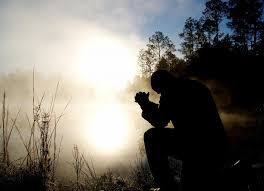
Even so, there may be times when we should pray without words, sitting silently in God’s presence in an attitude of worship and waiting while we think about him or focus on a verse of Scripture. After a while, we may find a thought enter our head about someone or something we have been praying about – often it will be an insight about what the real need is and how we can better understand that person or situation. Then, when we pray with words, we can pray the prayer God wants us to pray – one that reflects his will.

“There are times when solitude is better than society, and silence is wiser than speech. We should be better Christians if we were more alone, waiting upon God, and gathering through meditation on His Word spiritual strength for labour in his service.” (Charles Spurgeon)

Paul tells us we should pray without ceasing (1 Thessalonians 5:17). Does he mean we should be talking all day long? No. Sometimes prayer can be a quiet connection with God.

Or, to paraphrase Francis of Assissi: Pray without ceasing. When necessary use words.

“Be cheerful no matter what; pray all the time; thank God no matter what happens.” – 1 Thessalonians 5:16-17 (The Message)

Less of Me

We are settling for a Christianity that revolves around catering to ourselves when the central message of Christianity is actually about abandoning ourselves.” – David Platt

We sing a song in our church with these lyrics: “If more of You means less of me, take everything. Yes, all of You is all I need. Take everything.” Wow. That’s a lot to pray. Take everything. Why would we pray that kind of prayer? Maybe because we’ve figured out that our way of doing things really doesn’t work!

We present an aura of confidence, good will, and purity when inside we are none of those things. It’s easy to fall into a life of covering, posturing, and pretending. And it’s exhausting!

Instead of an ego-centered life, God wants us to admit our weakness, so he can be our strength.

He wants us to give up our earthly desires, and let him provide what will really satisfy.

He challenges us to stop trying to be better, stronger, wiser, and, instead, to focus completely on him.

He invites us to relinquish pride, appearances, being right, honor, self-satisfaction, superiority, authority, perfection. He doesn’t want those things to be important anymore.

Why all this giving up? Because God knows that when we always have to be in control, we’re not able to accept the greater gifts he offers us.

When John the Baptist was preaching, he had many followers. When Jesus came on the scene, John pointed to him as the one he had been talking about all along, and he says, “He must increase and I must decrease.” He deliberately steered people’s attention away from himself and onto Jesus.

I think that’s what this is all about. Less of me. More of him.

“For you died, and your life is now hidden with Christ in God.” – Colossians 3:3

That’s what love does.

“Charity is a virtue which, when our affections are perfectly ordered, unites us to God. For by it we love him.” – St. Augustine

What do you do when you’re confronted with someone in need? Do you automatically stop what you are doing and reach out to help? Sometimes it’s just that easy. We don’t ignore the elderly woman struggling with packages or hesitate to open the door for someone in a wheelchair, or offer a ride to the one who needs to get to a job interview.

But there are other needs that confront us that really cost us something. What do we do then? If our focus is on what it will cost us in money, time, or pain, we become hesitant to commit, we hold back on helping. Is that how Jesus would be thinking? Our focus is so easily turned from the person in need to what their need may demand of us. His never was.

The only way never to be in such a situation is not to have a family, not to have friends. If we live in isolation, no one will ever need our help. But what kind of life is that? Relationships cost us something. We are called to live in community – to love our neighbors, to support our brothers and sister in Christ, and to give generously.“You can give without loving, but you cannot love without giving.” (Amy Carmichael).

We don’t need to solve everyone’s problems, but we do need to love them as Jesus would if he were in our place. That’s what love does.

“…give, and it will be given to you. Good measure, pressed down, shaken together, running over, will be put into your lap. For with the measure you use it will be measured back to you.” – Luke 6:38

Are you sure you’re right?

The worst thing is not being wrong, but being sure one is not wrong.” – Paul Tournier

When Jesus asked Peter “. . . who do you say that I am?”, Peter answered correctly. A short time later he made a big mistake in telling Jesus he should not be talking about crucifixion and dying. Jesus gave a strong reprimand saying, “. . . you are not setting your mind on the things of God, but on the things of man.”

Peter was thinking from a human perspective, and this encounter becomes a caution to us that, when we are setting our mind on earthly things, as Peter was, we get the answers to life’s most important questions wrong.

Paul was passionate about arresting and killing Christians because, in his world view as a Pharisee, it seemed like the right thing to do. Then Jesus met him along the road, and everything changed. Paul saw the truth and, we know from his later writings, he was horrified at how wrong he’d been. When he was thinking from a strictly human point of view, he was following wrong answers to life’s most important questions.

Paul was wiser by the time he wrote to the Christians in Rome telling them not to be conformed to this world, but to be transformed by renewing their minds and, when they do that, they will know God’s will. They will correctly understand the answers to life’s most important questions.

We get to direct where our mind goes: To things above or things on earth? To the things of God or the things of man? If status quo is OK, we keep doing what we’re doing. If we want transformation, we have to be intentional about directing our minds into spiritual thinking.

“Set your minds on things that are above, not on things that are on earth.” – Colossians 3:2

Made Whole

This is a bonus post from my friend, Jane. I hope it blesses you as it did me.

Happy Valentine’s Day everyone!

World of Wonders

“If we would venture more upon the naked promise of God, we would enter a world of wonders to which we are yet strangers.” – Charles Spurgeon

It’s a great quote by Spurgeon. Then we look at life and at the world around us and we ask where those wonders are. What are we missing?

Maybe it is the barely-avoided accident on the highway.

Maybe it’s a new-born baby.

Maybe it’s the sickness we didn’t catch.

Maybe it is the peace we feel even when the task in front of us seems too big.

Maybe it’s our friend’s insight into a problem we are trying to solve on our own.

The Bible tells us we humans are just dust. Some call us “mud people”. Yes, mud people in whose life is the breath of God making us into someone he loves, adores, cares for, and nurtures. He takes us by the hand, leading us step by step. That, in itself, is a wonder! There is nothing too hard for God. He is the God of wonders, working them every day in our world.

Some of them are small. We have to be paying close attention to see them. Others are big -like when we get an unexpected gift that is just exactly what we needed, or someone we’ve been praying for is healed in a way that can only be be supernatural, or someone we love suddenly sees the truth of who Jesus is. These wonders do happen. Let’s look for them and then stand in awe at what we see. G. K. Chesterton said it best: “We are perishing for lack of wonder, not for lack of wonders”.

“Seek the Lord and his strength; seek his presence continually! Remember the wondrous works that he has done, his miracles, and the judgments he uttered,” – Psalm 105:4-5

Their god is . . . .

“Each day provides a multitude of ways to improve the way we shelter the Holy Spirit of God.” – Gary Thomas

There are times when we seem to have a love-hate relationship with our bodies. As Christians, we know that our bodies belong to God, that the Holy Spirit lives within us, and that we have a responsibility to take care of the body we have, whatever its present condition may be. Much about our bodies is outside of our control. But we do have something to say about how we eat, exercise, and rest.

Paul actually refers (not favorably!) to people whose “god is their belly” (from Philippians 3:19). I think we could safely interpret it to mean that it’s possible to let our bodies have too much to say about how we live. Sometimes it is our baser instincts that rule our decisions.

But we don’t have to follow the demands our body makes for satisfaction, pleasure, or foods. We have to give it what it needs, but not everything it wants! When we make God our first priority, our one and only God, we are less likely to make our appetites, our comfort, or our happiness into “gods”.

If we’re serious about having God rule our bodies, what do we do? We learn to feed them well, to get exercise to keep our muscles strong, and to find the right balance between work and rest and between feasting and fasting. We can use our bodies to turn us toward God, not away from him, as we learn to care for these temples in ways that please him.

 “I appeal to you therefore, brothers, by the mercies of God, to present your bodies as a living sacrifice, holy and acceptable to God, which is your spiritual worship“- Romans 12:1

Calming the Soul

“I can change my mind, but only the Holy Spirit can change my heart.” ~ Jack Deere

Years ago, coal miners would die from toxic gases in their unventilated mines. Someone realized canaries were sensitive to these gasses and would succumb to their effects sooner than humans. So miners would take canaries with them into the mines. If a canary began to show signs of toxicity, the workers knew it was time to evacuate.

As followers of Jesus, we have a similar warning system inside us: the Holy Spirit. When we are in situations that are dangerous or where we might be tempted to sin, the Spirit sends urgent signals for us to get out of harm’s way. If we trust him, we’ll pay attention and run.

Not only did the canary in the mine warn of danger, he also was an indicator when all was well. If the canary was singing, the men could work without worries about the air they were breathing. Productivity increased when there was a sense of security.

As we learn to know the Holy Spirit better, we learn to turn our attention toward him when we get anxious. If we sense he isn’t worried, we shouldn’t be either. Instead of letting anxiety prevail, we can learn to connect to him as our stability, our source of peace.

We need to get to know this Spirit better so we’ll sense danger when it’s there and have peace when it’s not. It’s beyond imagination, but the Holy Spirit is actually is our protector, and we are better off when we get in the habit of giving him our attention and trusting him to guide.

“. . . do you not know that your body is a temple of the Holy Spirit within you, whom you have from God?” – 1 Corinthians 6:19a

When God Pauses

“He already cares for the things we pray about… He has simply been waiting for us to care about them with him.” – Philip Yancey

When we read the account of Sodom in the Bible, we find God is about to destroy the city because of its wickedness, but he pauses. Why? Because he remembered Abraham. And when he remembered Abraham, he sent two angels to escort Lot, his wife, and daughters out of the city just minutes before he destroyed it.

What did God remember about Abraham that caused him to pause? He remembered Abraham’s intercession for his nephew Lot. Abraham had bargained to the point where God agreed he would not destroy the city if there were ten righteous people in it. But there weren’t, so God was going ahead with his plan. That’s when he paused.

At that point, it seems God wasn’t focused on Lot and his predicament. He was remembering Abraham and his prayer (see Genesis 19:29). He wouldn’t have had to rescue Lot. The bargain Abraham made required ten righteous people. But God heard Abraham’s heart, and he sent rescue angels for Abraham’s sake.

Isn’t it amazing that God is influenced by the prayers of one person? That he sometimes adjusts his plans because we ask? If what we ask for can be given to us and not interfere with God’s bigger plan, it seems that God is willing to answer our prayer.

Are you praying for someone – for their rescue or recovery or repentance? Don’t give up. God may be sovereignly working his plan in the world and suddenly pause, remembering you and your prayer, and decide to act – because you asked.

“Rejoice always, pray without ceasing, give thanks in all circumstances; for this is the will of God in Christ Jesus for you.” – 1 Thessalonians 5:16-18.