Practice on Humans

“. . . anyone who does not love his brother, whom he has seen, cannot love God, whom he has not seen. (I John 4:20b)

We can’t see God. Or sit across the table with him. Yet we are told that the greatest commandment is to love him and the second is to love our neighbors. I wonder if it has to be in that order.

Praying about loving God one morning, a thought came that I believe was from him: “Practice on humans.”

Maybe it is easier to love someone we can look in the eye, or touch, or hear. And maybe loving humans better will help us love God better, too.

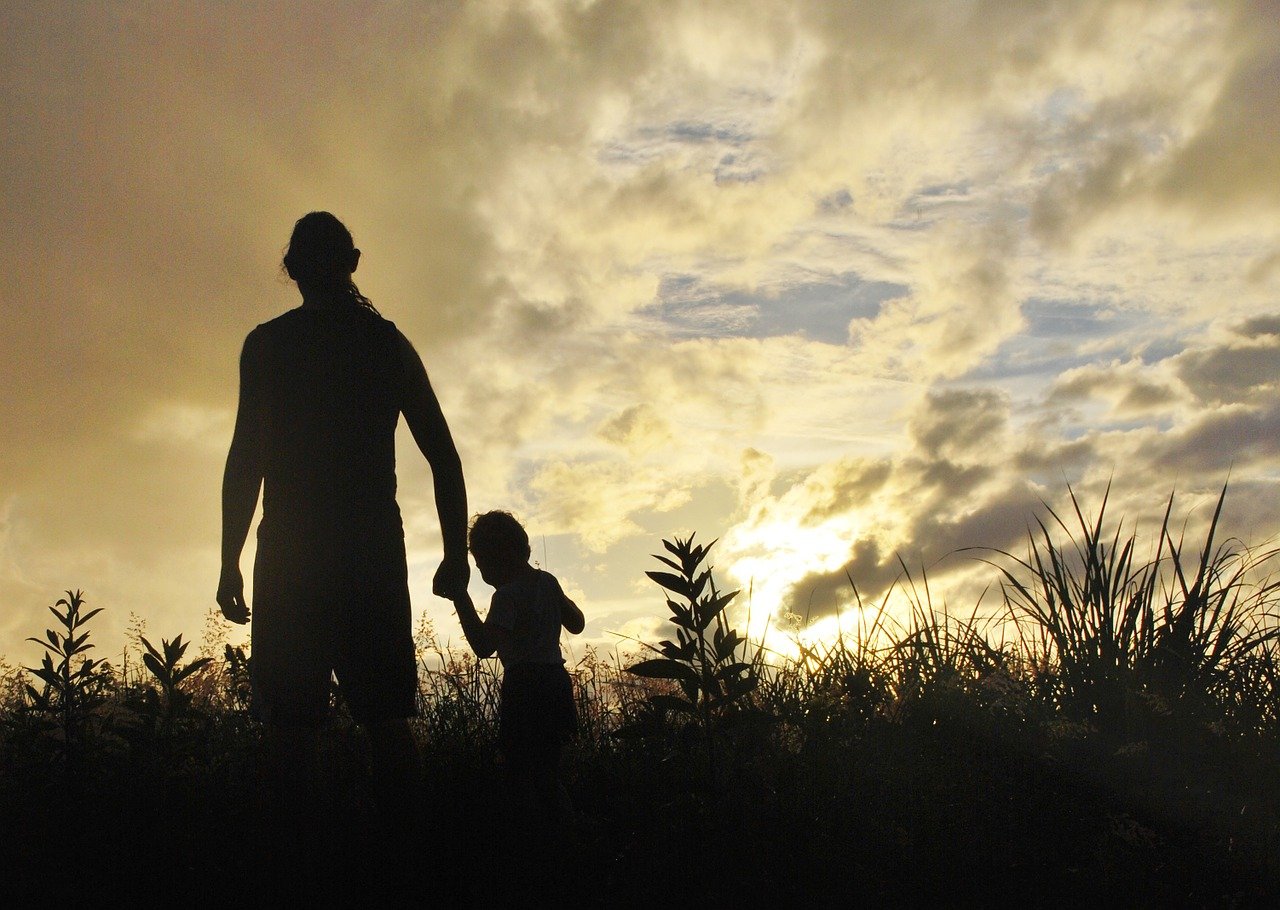
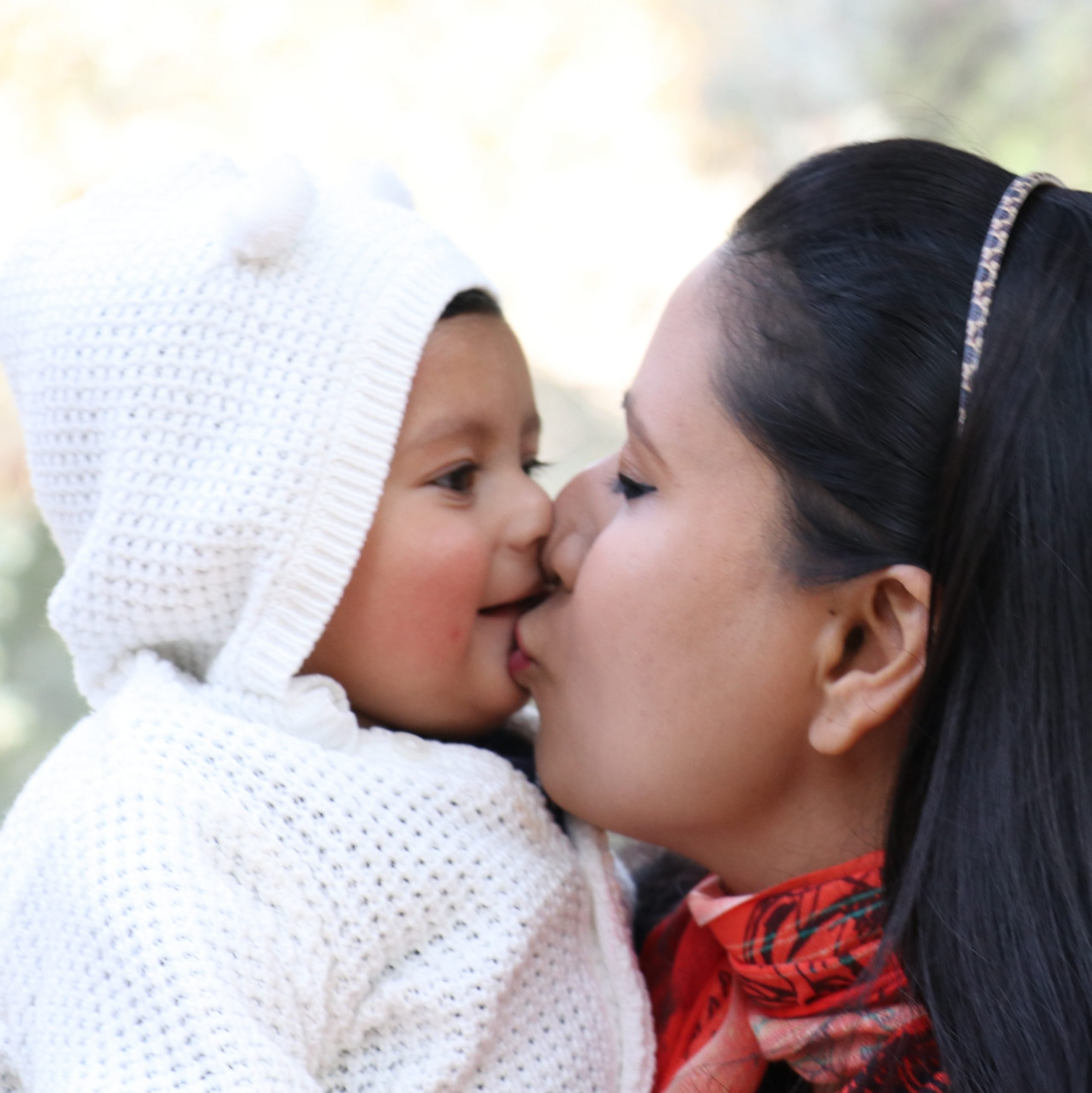
We can start with those who are easy to love – babies and small children. Right? Then other family members, people at work or in the neighborhood. The next step is when God asks us to love someone who is dirty, angry, clingy, selfish, or arrogant. We start with those we can love easily, and then God moves us on to bigger love challenges. When we accept those challenges, allowing God’s love to flow through us, we become better lovers and, as we do, we find our love for God and love for human beings are closely intertwined.

Mother Teresa was ministering to lepers one day when a visiting American businessman saw her put her arms around a sick and very dirty man. Cringing, the American visitor commented to the person with him, “I wouldn’t do that for all the money in the world.”

Overhearing him, Mother Teresa responded, “Neither would I. But I would do it to show him the love of Jesus.” She had mastered the love lessons. Let’s find someone to love today!

“Spread love everywhere you go. Let no one ever come to you without leaving happier.” – Mother Teresa


The Every Day God

My mouth is filled with your praise and with your glory all the day”. – Psalm 71:8

As I’m writing this, it’s Sunday morning. God’s day. Going to church on Sunday is good! But, it’s even better to make every day, all day God’s day. I don’t mean we should sit, pray, and read our Bibles all day. God wants us to live our actual lives – family, work, play – all of it.

But, what if, while we were living our daily lives, we invited God to be with us? What if we acknowledged his presence by talking to him – as we drive to work, shop for groceries, or relate to others?

“Spiritual people are . . . those who draw their life from a conversational relationship with God” (Dallas Willard). When we have an ongoing conversation with God, he enlivens us, energizes us, gives us true life. We become aware of what pleases him, are a little bolder in sharing our thoughts about him, and find our hearts softening toward those around us. Then, little by little joy creeps in. When I talk to God more, I smile more, too!

What can you talk to him about? Here are a few ideas from Psalm 71:

Tell him when you don’t feel safe: “Be to me a rock of refuge to which I can continually come.” (v. 3a)

Praise him for who he is: “My praise is continually of you.” (v. 6b)

Talk to him about your dreams: “I will hope continually.” (v. 14a)

Thank him for something he did for you: “My tongue will talk of your righteous help all day long.” (v. 24a)

The more we talk to him, the more natural it feels. Life gets a new dimension – God’s perspective, direction, companionship. Amazing, really!

“Prayer is talking with God about what we are doing together.” – Dallas Willard

Just love him.

“Direct your heart to the Lord and serve him only.” – 1 Samuel 7:3

If you have made a commitment to follow God, you know you don’t do it perfectly, right? He doesn’t talk out loud to us. His Book can be hard to understand. We pray and believe, but sometimes we don’t know if he hears. We want to love others as ourselves, but know we don’t do that as well as we should.

When I was getting discouraged about these things recently, God placed this question in my mind: “Where is your heart?” That was easy to answer. My heart is with God. I love him. I want to serve him. You know what I then “heard” in my head? “That’s all I need.” Really? All I have to do is direct my heart toward him and he’s happy with that? Yes. Because if he has my heart, he can work with me, steer me, grow me, use me.

Where is your heart?” has become an encouraging question for me. Answering that a few times a day might be helpful for you, too. If our hearts are directed with sincerity toward God, we will find ourselves making decisions (time use, possessions, spending, sharing) based on our knowledge that we really do love God. That reassurance helps to guide our choices. We have to focus on only one thing – where is my heart? Our actions will follow as naturally as water flows toward the sea.

“Let a man set his heart only on doing the will of God and he is instantly free. If we understand our first and sole duty to consist of loving God supremely and loving everyone, even our enemies, for God’s dear sake, then we can enjoy spiritual tranquility under every circumstance.” – A. W. Tozer

Breaking Promises

“Let us hold fast the confession of our hope without wavering, for he who promised is faithful. ” – Hebrews 10:22

Did you ever make a promise and later regret it? We probably all have. We are people of our word and, no matter what, we’re determined to keep a promise we’ve made. But, should we?

Most of the time we should. But, the Bible teaches that, if keeping a promise leads to sin, it’s better to break the promise than to do something harmful or wrong. David’s an example of this when he vows to his 600 fighting men that they will wipe out the household of Nabal because Nabal refused to provide food for David’s men. David is on his way to do that when Nabal’s wife, Abigail, meets him, brings food, and talks him out of his foolish promise. David relents and then acknowledges that her intervention kept him from sinning (1 Samuel 25).

Herod should have been willing to go back on his promise when he told Herodias’ daughter she could have whatever she wanted, and she asked for John the Baptist’s head. Herod was too proud to go back on his word, and John was unjustly and immediately beheaded.

If keeping our word will have consequences that are harmful, sinful, or just plain unwise, it’s better to break that promise than to keep it (Leviticus 5:4-6). We will have to give explanations, apologies, and even restitution if we have hurt someone by backing away, but that’s better than doing the wrong thing.

We should not make promises lightly, but we should never keep a promise that leads to sin or harm. Speak carefully, correct thoughtfully, live wisely, and God will be glorified.

“Never do what’s wrong! Do nothing until it’s right. Then do it with all your might.” – Chuck Swindoll

What I Can’t Do for Myself

Not that we are sufficient in ourselves to claim anything as coming from us, but our sufficiency is from God,” – 2 Corinthians 3:5

If God loves us, has all the resources in the world at his disposal, and is almighty, we should be living lives of ease, right? Just ask and he will deliver what we need. Kind of like Amazon.

Yet, we know it doesn’t work that way. God invites us to tell him our needs, but he often asks us to participate in answering our own prayers and sometimes even our prayers for others. If we’re sick, we pray for healing, but we also see a doctor, take the medicine, and get rest. If we’re in financial need, we ask God for direction and help, but we also work with diligence and spend with discretion. And if we pray for a friend in need, we might also lend a hand.

God enables us, partners with us, and blesses our efforts. He knows that is better for us than simply giving us everything we ask for. Maybe our prayer should be more like this:

“Dear Lord, please do for me what I cannot do for myself.”

When we pray that way, we begin to realize there are some critically important things only God can do. Only he can direct our paths, protect us from the evil one, forgive our sins, and give rest to our souls. Every one of these things is foundational to our physical, spiritual, and emotional well-being and, try as we might, we cannot do them for ourselves.

Sometimes, though, when he thinks it best for us, he steps in to heal, provide, or give special wisdom. Only he knows when and how to intervene. That’s why we trust him.

“Our quitting point is God’s beginning point.” – Woodrow Kroll

Just a Glimpse

Now therefore, if I have found favor in your sight, please show me now your ways, that I may know you in order to find favor in your sight . . .Please show me your glory.” (Moses to God in Exodus 33:13 and 18)

There sure are a lot of problems in our world. Every now and then I try to think of ways to solve them. Last week I hit upon a solution – something that would take care of a lot of the these issues in a moment’s time. So I prayed all that day, off and on as I went about my activities, that God would just give a glimpse of himself to everyone in this world. Just a peek at who he is – some revelation of his glory, power, justice, majesty, awesomeness. That’s all it would take, I thought, to set things right.

But, his answer to that day-long, murmuring prayer came to me in my Bible reading the next morning, “You do not know what you are asking” (from Mark 10:38). Of course he was right. I have no idea what it would mean for God’s glory to be revealed to the whole world. Maybe it would set everything right. Maybe it would create a chaos I cannot fathom. I had to acknowledge that sometimes my prayers are wise and sometimes foolish. Maybe I should resist giving God advice and accept that he has a plan I don’t understand.

Something inside me still wants a glimpse of him for myself – even if not for the whole world. The more I know of him, the more I want of him. And I know I’m not the only one. You, too?

“The deepest longing of the human heart is to know and enjoy the glory of God. We were made for this.” ~ John Piper

Scars

“Not only so, but we also glory in our sufferings, because we know that suffering produces perseverance; perseverance, character; and character, hope.” – Romans 5:3-4

If you walk among the aspens, you’ll notice their scarred trunks. Many of the roundish blemishes are from branches that have fallen off, a natural part of the tree’s growth. Others, though, are more rugged. These irregularly shaped scars are usually the result of elk having chewed on the bark. Over time the wounds heal, but the scars remain as a testament of survival.

We all have scars. They are evidence of our past, and they make us unique. Our scars usually result from trauma – physical or emotional. For some it was abuse or neglect in childhood. Others of us carry scars from broken relationships, losses, accidents, illnesses, or threats. Many older people, looking back on their lives, acknowledge the pains they have endured, and still end up saying, “I wouldn’t change anything.” Why? Because they know they wouldn’t be the people they became over time without the events that sometimes wounded them.

We don’t have to be ashamed of our scars. They record our histories, they give evidence of our ability to survive, to heal. And they allow us to connect with those who recognize those scars as theirs, too.

Jesus was raised from the dead after a brutal crucifixion. He could have had any resurrection body he wanted, but he chose to keep his scars. They verified his identity to doubting disciples, and they still give evidence of his triumphant sacrifice for humankind.

Every scar we have represents pain that, by God’s grace, made us stronger, better, more like Christ. He didn’t hide his scars. We shouldn’t either.

Suffering is arguably God’s choicest tool in shaping the character of Christ in us. – Joni Eareckson Tada

Paradise Lost?

 “Truly, I say to you, today you will be with me in paradise.” – Luke 23:43

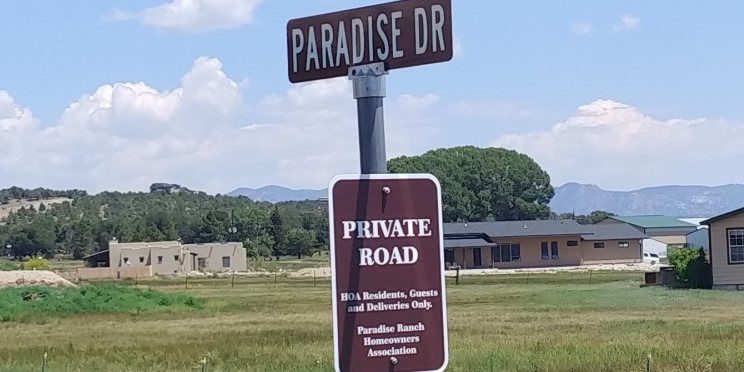
I walked along a familiar road when I came upon this new sign telling me Paradise Drive was off limits. I had taken that shortcut many times before, but was no longer welcome.

Then I read the small print: HOA Residents, Guests, and Deliveries Only. Apparently there is a way in. Because I have nothing to deliver, my only hope is to be invited by a resident. I guess I’ll have to make some new friends!

You probably know where I’m going with this. We all want to get to Paradise someday, don’t we? Or Heaven as we more often call it. We shouldn’t be surprised to find that Heaven has restrictions for entry, too. But there’s hope! We already have Someone in residence there who wants us to come in. In fact, here’s what Jesus said to his disciples on the night he was arrested: “I go to prepare a place for you. And if I go and prepare a place for you, I will come again and will take you to myself, that where I am you may be also” (John 14:2b-3).

Then, just a few hours later, from the cross, Jesus tells the repentant thief that they would be together in Paradise that very day. It seems that the way in is to accept an invitation from Jesus to join him there. So, this sign notwithstanding, I know my way to Paradise. I am the guest of the one who is preparing a place for me.

He issues that invitation to you, too. Say “yes” to Jesus and follow him home!

God is going to be as pleased to have you with Him in heaven as you will be to be there with Him.”
– A. W. Tozer

Obstacles

“Be strong and courageous.  Do not be frightened, and do not be dismayed, for the Lord your God is with you wherever you go.” – Joshua 1:9b

Do you feel like you’ve been stopped in your tracks? You’ve been on a path you thought God was directing, and now there’s a roadblock you hadn’t anticipated. What do you do? Turn around? Give up? Or push on?

In the first chapter of the book of Judges, we read about the Israelites moving into the land God had promised them. With God’s help, they took over village after village, then came to one area where the people had iron chariots and they gave up. Didn’t even try.

If the Red Sea and the walls of Jericho were not obstacles too big for God, would he be intimidated by iron chariots? Of course not! But the people didn’t see that, so they stopped. As the history continues, we find the people with iron chariots were the very ones who led God’s people into worship of idols. Stopping short of the goal God has placed in front of us leaves us in danger.

What obstacle do you face right now? Difficult relationship? Job or career struggles? Sickness? Financial setback? If we are walking with God and, to the best of our ability, following his will, there is no obstacle too big for him. None!

So, let’s not quit before we complete what God has called us to do. We need to rely on him for strength and push through the challenge in front of us – whatever it is.

“We need to remind ourselves that God can change things. Outlook determines outcome. If we see only the problems, we will be defeated; but if we see the possibilities in the problems, we can have victory.” – Warren Wiersbe

The Family Name

“I will be a Father to you, and you will be my sons and daughters”, says the Lord Almighty. – 2 Corinthians 6:18

Parents who adopt look for a child they think will fit into their family – someone they can love, nurture, and provide for. Once they find the child, they can’t wait to welcome him into their home.

God is building a family, too! His first adoption was the Jewish people. Here’s what he said to them, “. . . the Lord has chosen you to be a people for his treasured possession, out of all the peoples who are on the face of the earth (Deuteronomy 14:2). Scripture often refers to Israel as God’s son.

God wasn’t done yet. Now, he we hear about other peoples of the world – those who are not Jews: “In love he predestined us for adoption to himself as sons through Jesus Christ, according to the purpose of his will” (Ephesians 1:4b-5).

We are not born into God’s family with our physical birth. We have to be adopted in. The good news, though, is that anyone who wants to be in God’s family can be. He’s still in the adoption business.

Being adopted means our name changes. As we read above, we are brought into God’s family through Jesus Christ and, thus, we take the name Christian. It’s up to us now to carry that name with dignity, to bring honor to the family of God, to look to God as Father, and to follow Jesus as an older brother.

In all that, we never, never forget that God saw us, loved us, and chose to adopt us as his own. With that, we should wake up every morning smiling!

By God’s mercy, wretched paupers are made royal heirs together with Christ. By God’s mercy, wayward sinners are embraced as righteous sons.” – Jan Verbruggen